Every villa listing looks the same online: a sparkling pool, a sun-drenched terrace, and a caption promising the perfect family escape. In reality, two villas with identical photos can differ enormously in floor space, pool safety and how well they actually work with toddlers in tow. Choosing the right private villa for a family holiday takes more than falling for the prettiest picture.
This guide walks you through the decisions that matter most: how to size a villa to your headcount, how far from the beach or town is reasonable with kids, which safety features to insist on, and which amenities genuinely earn their place. You’ll also find practical advice on timing your booking, what villas typically cost, and how to read between the lines of listings and reviews. By the end, you’ll have a clear method for building a shortlist you can book with confidence.
How to Choose a Private Villa for a Family Holiday
Before you fall in love with a pool photo, count heads. How many bedrooms do you actually need, and what beds are in them? Two twins pushed together are not the same as a proper king, and some “family villas” expect children to share a pull-out sofa in the living room. Check whether siblings can share a room, whether beds are real or foldaways, and whether the sleeping arrangements will still work after a few nights of jet-lagged kids.
Match the villa type to the trip
The right property depends on what your family wants from the week. A beach villa suits families who plan to swim and paddleboard daily and want sand within easy reach. A countryside finca works better for slower holidays built around the pool, long lunches and exploring villages by car. An alpine chalet is the natural choice for ski trips or summer hiking, with the added consideration of heating and drying space for gear.
Staff or self-catering?
Decide early how much service you want. A fully staffed villa with a cook and daily housekeeping removes all chores but adds cost and the feeling of having people around. Self-catering gives you freedom and keeps budgets tighter, but someone still has to shop and cook. Many families land on a hybrid: a cleaner a few times a week, a welcome grocery stock, and a private chef for one or two nights. Fix this before booking, because not every villa can add staff after you arrive.
Location: How Far Is Too Far With Kids?
With children, distance stops being a detail and becomes the shape of your whole trip. A villa that looks gloriously remote can turn every forgotten nappy or loaf of bread into a half-hour round trip. As a working rule, aim for a 10-15 minute drive to the nearest beach, town or supermarket. That keeps ice cream runs and dinner out painless while still giving you privacy and quiet at the villa itself.
Check the road, not just the map
Maps won’t tell you whether the last two kilometers are a narrow dirt track with a steep, rutted section. Ask the host directly about road quality and whether the access route suits a standard rental car or requires a 4×4. This matters more than it sounds: an awkward track affects everything from airport transfers to loading the car with beach gear, and some rental insurance policies don’t cover unpaved roads, so check the terms before you book.
Pick a destination style that fits your pace
Think about what your days will actually look like. Coastal regions suit families who want beach days on repeat, with swimming, snacks and sandcastle sessions filling the schedule. Lake villas suit slow weekends, where the highlight is a morning swim and an afternoon on the water with barely anyone else around. If that sounds like your kind of trip, our guide to lake villas for peaceful weekends goes deeper on what to look for. Neither style is better; the wrong one for your family is the problem.
Space, Layout and Child Safety
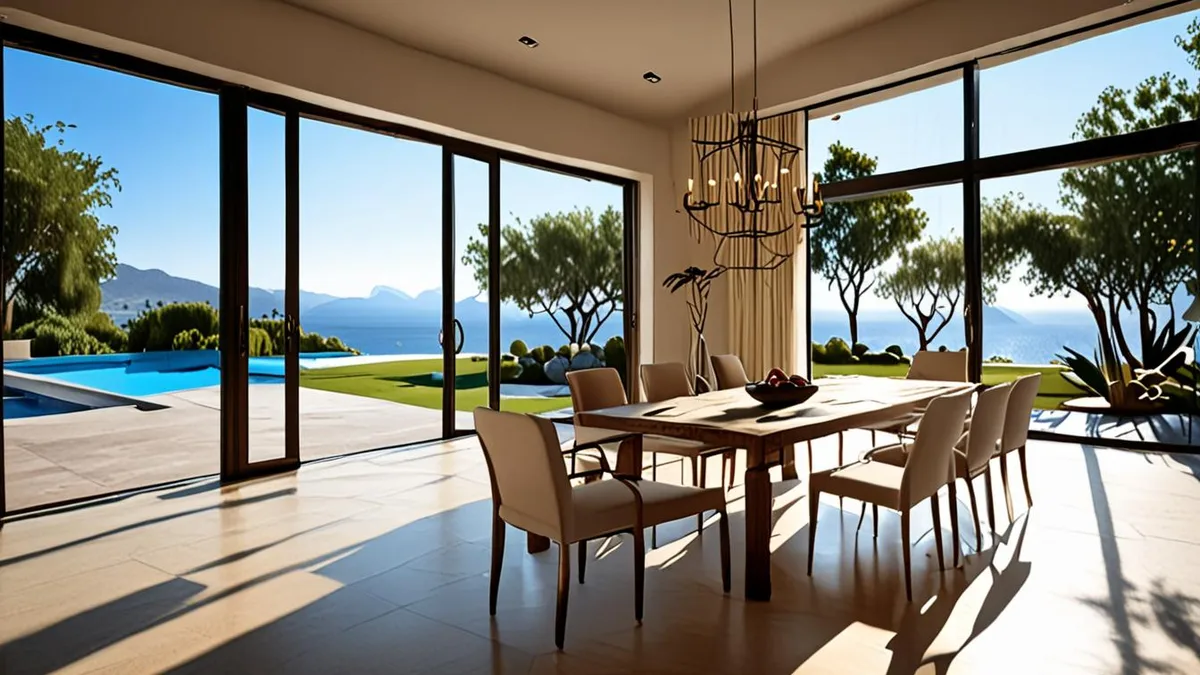
Space is where family villas quietly fail. A property can sleep six on paper and still feel cramped if the “third bedroom” is a converted cupboard or the only seating is a two-seater squeezed next to the dining table. For a family of four, look for at least 100-120 m2 of living space, ideally with a separate living area so adults can talk or read after the kids are in bed, and a second bathroom if you can get one. Morning routines go far more smoothly when nobody is queuing for a shower.
Layout matters as much as square meters. For toddlers, single-level villas remove an entire category of worry, and if the villa has an internal staircase, check whether it can be gated. Outdoor space deserves the same scrutiny: terraces with drops, unfenced ponds and steps down to a garden all need a quick mental risk assessment.
Safety and baby gear checklist
- Pool safety: a fenced pool or a securely locked pool gate is the single most important feature for families with young children, so confirm it exists rather than assuming the photos show one.
- Stair gates and balcony rails: ask whether stair gates can be fitted and check the gap between balcony rails in photos; wide gaps are a real concern for small children.
- Cots and high chairs: most family-friendly villas list cots, high chairs and pool fences on request, but “on request” means you must ask at booking time, not on arrival, to be sure they’ll actually be there.
- Blackout blinds: long summer evenings and bright bedrooms can wreck young children’s sleep, so check whether bedrooms have shutters or blackout options, especially in Mediterranean destinations.
Put every one of these in a message to the host before you pay. A host who answers specific questions clearly is also a good sign of how responsive they’ll be if something goes wrong during your stay.
Kitchen, Pool and Practical Amenities
When you’re staying in a villa for a week or more, the kitchen quietly becomes one of the most used rooms in the house. A home cinema sounds impressive in a listing, but with kids in tow, a fully equipped kitchen with a dishwasher and a washing machine will do far more for your holiday than a wall of screens. Cooking breakfast, washing swimwear and running a load of dishes after dinner are daily realities, so check the amenities list for these specifically rather than assuming they come standard.
Ask the host or agent exactly what “fully equipped” means: how many burners, whether there’s an oven, a microwave, a coffee machine and enough plates and cutlery for your whole group. If you plan to self-cater most meals, a decent fridge size and basic pantry staples like oil, salt and spices can save you an immediate supermarket run on arrival day.
The pool question most families forget to ask
A private pool is often the reason families choose a villa over a hotel, but water temperature matters. If you’re traveling outside June to September, confirm the pool is heated, because unheated pools can sit below 20°C and children who would happily swim for hours may last ten minutes. Pool heating sometimes costs extra, so ask whether it’s included in the rate and how long the pool needs to warm up after being switched on.
For longer stays, also check the practical comfort basics: air conditioning in the bedrooms (not just the living areas), realistic Wi-Fi speed if anyone needs to work or stream, and shaded outdoor dining. Eating every meal at a table in full afternoon sun gets old fast, so look for a covered terrace or pergola over the dining area. These details rarely appear in photos, which is why it pays to ask direct questions before booking. If you own property yourself, it’s also useful to understand how refinancing can affect home equity and future borrowing, since some families fund bigger trips by tapping into their home’s value.
When to Book and What Villas Cost
Timing matters more with villas than with hotels, because the best family properties in any region are limited in number. For peak weeks in July and August across popular European destinations, aim to reserve six to nine months ahead. Families tend to book the same well-reviewed villas year after year, so the ones with fenced pools, shaded terraces and sensible layouts are often gone by spring.
On price, expect to pay anywhere from $150 to $600 per night depending on the region, the size of the villa and the season. A modest three-bedroom house inland will sit at the lower end, while a large coastal villa with a private pool in high summer can reach the top of that range or beyond. Always check what is included, as cleaning fees and security deposits are often added on top of the nightly rate.
How shoulder season saves money
If your dates are flexible, traveling in May-June or September can cut costs significantly. Shoulder-season weeks typically cost 20-40% less than the same villa in August, and you get quieter beaches and towns as a bonus. September is often the sweet spot in Mediterranean regions, with warm sea temperatures and shorter airport queues. Just confirm pool heating if you travel outside June-September, since unheated pools can sit below 20°C and end up unused by the kids.
Vetting Listings and Reviews
Photos and star ratings only tell you so much. The listings that look perfect on screen sometimes fall apart the moment your kids cannonball into a pool that turns out to be two feet deep. Before you commit a deposit, do a little detective work on both the reviews and the listing itself.
- Filter reviews for families. Skim past the honeymooners and golf trips and hunt for reviews from parents with children of similar ages to yours. They will mention things couples never think about, like whether the shallow end is actually shallow, if the garden is secure, and how the villa handled a toddler meltdown at dinner.
- Pay attention to recency. A glowing review from five years ago tells you little about the current state of the furniture, the pool pump or the Wi-Fi. Prioritize reviews from the last one or two seasons, and note whether the host responds to problems quickly and graciously.
- Message the host directly. Ask specific questions: how deep is the pool at its deepest and shallowest point, what is the bedroom layout and are the rooms connected, and how quiet are the neighbors? A host who answers promptly and precisely is a good sign; vague or evasive replies are not.
- Cross-check photos against the amenities list. Look at every photo carefully and match it to the written list. If the listing claims air conditioning in every bedroom but the photos only show a unit in the living room, ask. Outdated photos of furniture, kitchens or pools are one of the most common complaints in villa reviews.
- Read detailed write-ups, not just ratings. A thoughtful review that describes the space, the kitchen and the pool in concrete terms is worth more than a dozen five-star ratings with no text. For a good example of what an honest, detailed villa review looks like, see this review of a family villa in San Juan del Sur, Nicaragua.
Ten minutes of this vetting can save you from a costly disappointment. If a host hesitates to answer simple questions about the pool or the bedrooms, treat that as your answer and move on to the next villa on your shortlist.
Wrapping Up Your Villa Shortlist
Two villas can show the same pool, the same terrace and the same sun-drenched photos online, yet feel completely different once your family moves in. The trick is to judge each listing on what actually matters: enough bedrooms and space for your group, a location within a short drive of the beach or town, genuine safety features like pool fences and gated stairs, and honest feedback from other families rather than couples.
Timing matters as well. Booking 6-9 months ahead for peak summer weeks gives you the widest choice, while traveling in shoulder season can cut the cost noticeably without cutting the experience. If you end up with a shortlist of three villas you have properly vetted, the final decision becomes simple. If this guide helped you, leave a comment or share it with another family planning their escape.