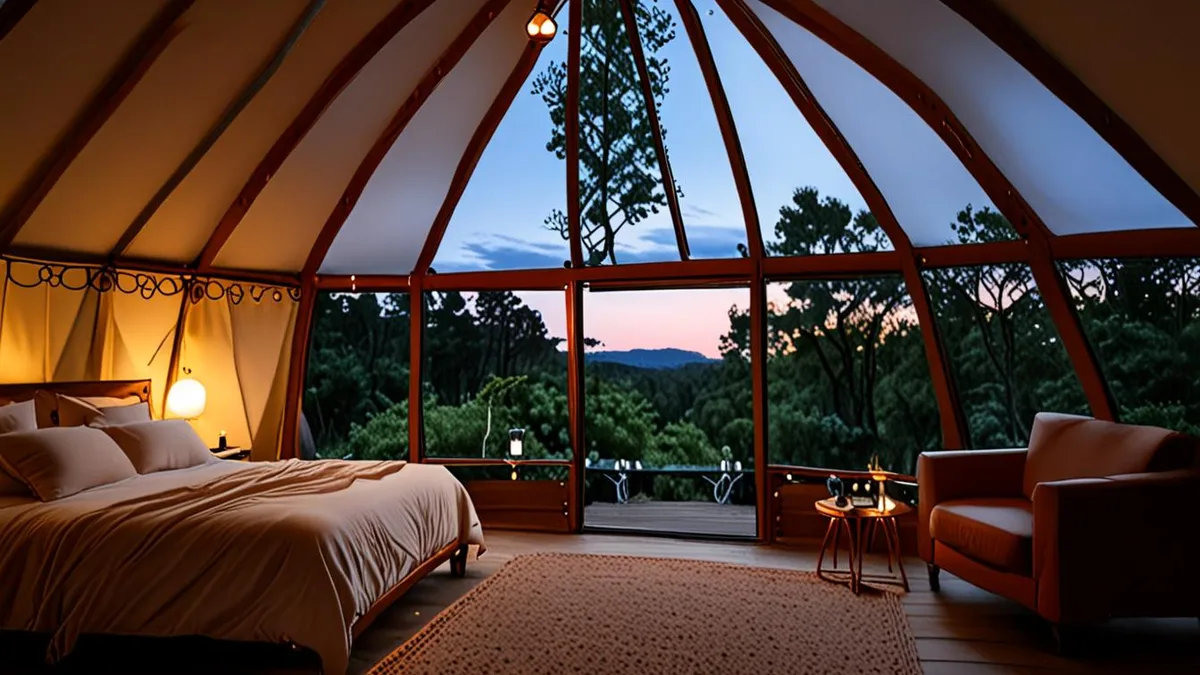
The photos on a glamping site’s listing almost always look perfect: a stylish safari tent at golden hour, a wood-fired hot tub steaming in the background, not a single muddy footprint in sight. What those images rarely show is the communal washblock, the unpaved access road or the extra fee for bed linen. Asking the right questions before you pay a deposit is the only reliable way to avoid unpleasant surprises when you arrive with your bags.
This guide walks you through the questions worth asking every glamping site before confirming your booking. We cover the accommodation itself, bathroom and kitchen access, location and seasonal conditions, what the price actually includes, booking terms and cancellation rules, and the specifics for families and groups. A short final section explains how to get your answers documented so you can book with confidence.
Questions About the Accommodation Itself
The single most common glamping disappointment is booking one thing and receiving another. “Tent” can mean anything from a basic bell tent to a luxury safari tent with a wood stove, and listings sometimes show the site’s best unit while you actually get a smaller model. Ask exactly what type of unit you are reserving: safari tent, dome, cabin or yurt, and whether the photo you saw matches that specific model.
Beds deserve equal attention. A listing that sleeps “four” may mean two real beds plus a sofa bed that no adult wants to sleep on for a week. Confirm the number and type of actual beds, and check that the stated sleeping capacity genuinely fits your group size rather than being a technical maximum.
Temperature is the detail travelers forget most often. Canvas structures cool down fast after sunset, and even on a warm summer evening the inside can drop below 10°C. Ask whether heating is provided, and whether air conditioning exists at all if you are traveling in a hot region.
- Wood stoves versus electric heaters: a wood stove gives real warmth but requires you to light and feed it, which matters if you arrive late or with children.
- Bed sizes: ask whether the “double bed” is a proper double or two singles pushed together, a frequent setup in European sites.
- Roof covers and zips: some safari tents have a solid roof panel over the canvas, which noticeably improves comfort in rain.
- Linen packages: clarify whether bed linen, towels and kitchen equipment are included in the rate or charged as an add-on per person or per bed.
Bathroom, Kitchen and Utility Access
Bathroom arrangements vary more than almost any other glamping feature, and they shape your daily routine more than the tent itself. Some units come with a private en-suite bathroom, while others rely on a communal washblock that can sit anywhere from 50 to 200 meters away. That walk is pleasant on a sunny morning and far less pleasant at midnight in the rain, so ask which setup applies to your unit.
Hot water is the next question. In many sites it is plentiful, but some eco-focused operations run showers on tokens or timers, which means short, carefully planned showers rather than long, leisurely ones. Ask how the system works before you pack, not when you are standing wet and confused in the washblock.
Kitchen access matters just as much if you plan to cook. Options range from a private kitchenette in your unit, to a shared camp kitchen with limited fridge space, to no cooking facilities at all. If you are booking for the shoulder season, it is also worth asking how these facilities operate outside the busy summer months; our guide to the best seasons for glamping in Europe explains how site services change between peak and quieter periods.
- Washblock ratios: ask how many showers and toilets serve how many units, since a busy site can mean morning queues.
- Token or timer details: find out whether tokens cost extra and how many minutes a token typically buys.
- Electricity limits: if you use a CPAP machine overnight, confirm the unit has a socket that stays live all night, since some sites cut power on a schedule.
- Fridge and storage: in shared kitchens, ask whether each unit gets its own labeled fridge shelf or cool box.
- Potable water: check whether tap water in the unit is drinkable or whether you need to fill bottles at a central point.
Location, Access and Seasonal Conditions
Glamping listings often name a whole region or a well-known destination, then leave out the small detail of distance. A site “near the coast” or “in the foothills” can still sit 30 to 60 minutes from the nearest town with shops. Ask for the exact distance to the nearest supermarket, bakery or pharmacy, and whether the site sells basic supplies on site for the moments you run out of coffee.
Road access is the second practical check. Many glamping sites sit at the end of unpaved tracks, which is part of their charm until you are driving a low-clearance car down a rutted lane after rain. Ask directly whether the final stretch is paved, gravel or dirt, and whether it becomes difficult in wet conditions.
Seasonal conditions change the experience dramatically, so ask what the site is actually like in your travel month. A meadow that photographs beautifully in June can be muddy in May, and July and August can bring mosquitoes that no listing photo will show you. Ask the owner point blank what past guests in your month have complained about; honest operators answer this readily.
- Specific road hazards: ask whether the track has steep sections, fords or tight bends that a larger camper van or trailer would struggle with.
- Parking distance: some sites require you to park in a central lot and walk your luggage 50 meters or more to the tent on a trolley.
- Noise sources: ask what lies beyond the site boundary, since a main road, a working farm with early-morning machinery or a nearby event venue can change quiet evenings entirely.
- Shade and exposure: a tent in full sun can become uncomfortably hot by afternoon, so ask whether your unit sits in shade during the day.
- Mobile signal: remote locations sometimes have weak coverage; ask whether your network works on site if you need to stay reachable.
What the Price Actually Covers
Glamping prices can look simple on a booking page and then grow by a surprising amount before you arrive. A stay advertised at 90-300 EUR per night is rarely the final number, so the smartest question you can ask is what that rate actually includes. Ask specifically whether cleaning fees, bed linen and final cleaning are part of the quote or billed separately. Some sites include everything, while others add a linen pack per person and a cleaning charge per stay.
Next, get clear on how you pay. Many sites require a deposit of 30-50% at booking, with the balance due before arrival. Ask for the exact percentage, the payment method and the deadline for the remainder, so you are not caught out a week before your trip. It also helps to read a proper breakdown of what glamping costs really include before you book, because pricing structures differ a lot between sites.
Finally, ask about extras that are charged on site and any local fees collected at check-in. These small additions are easy to overlook when you are comparing nightly rates.
- Firewood is often sold per bundle or per crate, which matters if you plan to use the fire pit or wood stove every evening.
- Hot tub or sauna use is sometimes metered by the hour or booked as a paid slot rather than included with your unit.
- Bike rental, kayak hire and guided activities are usually priced separately and may need reserving before you arrive.
- Tourist or resort fees are commonly calculated per person, per night, and collected in cash at check-in, so ask how yours is worked out.
Booking Terms, Deposits and Cancellation
The cancellation policy is the single most important term to get in writing before you pay anything. Ask for the full written policy for your specific rate, because discounted deals often carry stricter conditions than standard bookings. Free cancellation windows typically range from 14 to 30 days before check-in, but you need to confirm which window applies to you and exactly when your money becomes non-refundable.
Minimum stay rules catch a lot of travelers off guard. Requirements of 2-3 nights are common on weekends and in high season, so a site that looks available for a single Friday night may actually refuse the booking. Ask about minimums for your exact dates, including any holiday periods that carry longer requirements.
Timing matters too. Standard check-in is 15:00-16:00 and check-out 10:00-11:00 at most glamping sites, which can be tight if you have a long drive or a late flight. Ask whether early arrival or late departure is possible, and whether it costs extra.
- Ask what happens if weather forces a closure, such as storm damage or flooding, and whether you receive a refund, a credit or a rebooking date.
- Confirm how and when the deposit is refunded if you cancel inside the free window, since some sites return it within days and others take weeks.
- Ask whether travel insurance is recommended or required for your rate, as some operators expect guests to cover weather disruptions themselves.
- Request the cancellation terms by email rather than phone, so you have a dated record of what was promised.
Family and Group Specific Questions
Traveling with children or a group changes which questions matter most. Start with age limits, because some glamping sites are adult-only and simply do not accept children, even babies. If the site is family-friendly, ask what that means in practice: are there other families staying nearby, or will you be the only kids on a quiet adults-oriented property?
Then get specific about equipment for little ones. Cots, highchairs and child-safe features are not always standard, and they are not always free. Ask what is available, how it is booked and whether each item costs extra per night or per stay. A bit of planning around how to choose a glamping site for a family holiday can save you from arriving with nowhere safe for a toddler to sleep.
For groups, layout matters as much as availability. Two safari tents listed as available may sit on opposite sides of the site, which is not what most groups have in mind. Ask about the distance between units and whether you can reserve adjacent ones.
- Ask whether pets are allowed at all, since many sites exclude animals from canvas tents even when they welcome them in cabins.
- Confirm any pet fee, whether it is charged per animal or per stay, and what it covers.
- Ask which breeds or sizes are accepted, as some sites have weight limits or restrictions on specific breeds.
- Check whether pets must stay on a leash on site and whether there is a designated exercise area nearby.
- If booking several units, ask whether group bookings share a single cancellation date or each tent is canceled independently.
Asking Smart Before You Confirm
Glamping photos rarely show the full picture. A glowing shot of a safari tent at sunset says nothing about the shared washblock down the path, the unpaved track after rain, or what the quoted price actually includes. The only way to avoid unpleasant surprises on arrival is to ask the right questions before you pay anything.
Work through the unit details, utilities, location, pricing, booking terms and group needs before handing over a deposit, which often runs 30-50% of the total. Get the answers in writing, especially the cancellation policy and the 14-30 day free window, so everything is documented if plans change. Well-chosen questions turn a risky booking into a stay that matches the photos. If this helped you prepare for your next trip, leave a comment or share the article with a fellow traveler.