Most travelers who want to rent a villa in Crete have the same worry: will the beach nearby be wall-to-wall sunbeds or a quiet stretch of sand? The island’s famous resort towns make it hard to tell which regions genuinely deliver calm water and empty beaches, and which simply look remote on a map while sitting an hour from the nearest decent taverna.
This guide breaks down the areas that actually stay quiet: the south coast behind Rethymno and Heraklion, the far northwest around Kissamos, and the sun-baked eastern corner of Lasithi. We explain what makes an area genuinely quiet in the first place, when to book for the best rates, and how to vet a villa listing so the “near the beach” claim holds up. By the end, you’ll know exactly which corner of Crete matches your idea of a quiet beach holiday.
What Makes a Crete Area Genuinely Quiet
A big beach does not equal a quiet beach. What actually determines how peaceful your villa stay feels is a mix of three things: exposure to the summer meltemi winds that whip up the north coast, the distance to the nearest resort town, and how easy the area is to reach by road. A long, gorgeous beach that sits right off a main highway will never feel empty in August, no matter how far it is from a town.
Where the crowds actually go
Crete’s north coast carries the bulk of the island’s mass tourism, and for good reason: it holds most of the airports, the big resorts and the long sandy bays. That means calm water and genuinely empty sand are usually found elsewhere — on the south coast, in the far northwest, and out east in Lasithi. When the meltemi blows and the north coast turns choppy, the sheltered southern shores often stay calm and swimmable.
Quiet still needs to be practical
There’s a difference between quiet and inconvenient. A good quiet-area villa still needs a car — in most cases it’s non-negotiable — plus a village for groceries within a short drive and tavernas reachable in minutes, not an expedition. The sweet spot is a place that feels remote at night but lets you pick up bread, wine and fresh tomatoes in a 5-15 minute drive. Keep that balance in mind as we look at each region.
The South Coast: Rethymno and Heraklion Hinterlands
The beaches south of Rethymno and Heraklion — think Agia Galini, Triopetra and Ligres — behave differently from the northern shore. When the summer meltemi winds are battering the north coast and the water there turns rough, these southern bays often stay flat and calm. That alone makes them a smart pick for travelers who prioritize swimmable water over nightlife.
Getting there, and why that’s a feature
Expect a drive of roughly 45-90 minutes from the cities and their airports, depending on which stretch you’re aiming for. The final roads are winding, which filters out day-trippers and tour buses almost entirely. You’ll want a rental car, and it’s worth booking one with decent clearance for some of the narrower village roads.
What the villas are like
The villa stock here leans rustic in the best way: restored stone farmhouses and hillside properties with wide sea views, often surrounded by olive groves. You’re typically paying for privacy and scenery rather than resort-style polish. In shoulder season, nightly rates commonly fall in the €120-250 range, which is excellent value for a standalone property with a pool. Groceries and tavernas are usually found in small villages within a short drive, so stock up on the way in and plan dinners around the local kafeneio rather than a resort buffet.
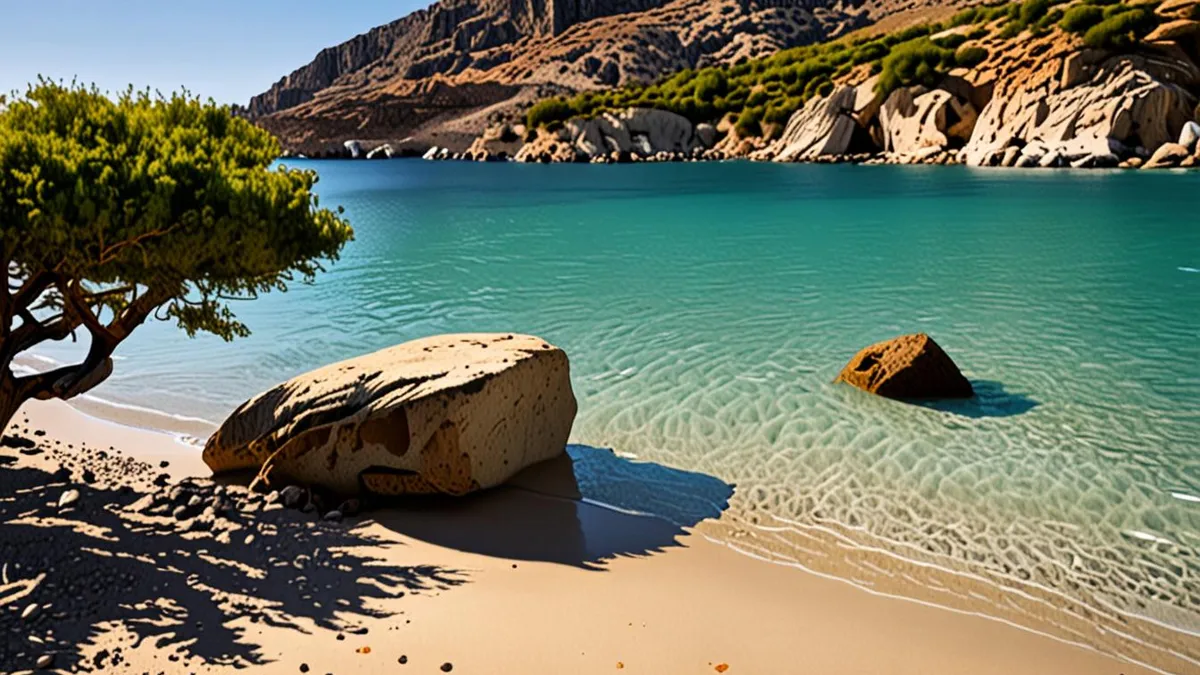
Far Northwest: Kissamos and the Chania Edge
If you want quiet beaches without going fully off-grid, the Kissamos area in Crete’s far northwest is hard to beat. It sits about 30-45 minutes from Chania, so you’re close enough to the airport and the city for a comfortable arrival day, but far enough that you skip Chania’s busy old town entirely. Around you are long sandy beaches and coves such as Falassarna, where the sand is broad and the sunsets are the evening entertainment.
Quiet mornings, easy adventures
This region suits travelers who want their mornings slow and local — coffee at a village kafeneio, an empty beach before the few day-trippers arrive — but who also like the option of a proper excursion. Balos lagoon and the island of Gramvousa are within reach by boat trip or a short drive, and they make excellent one-day outings without uprooting your base.
Villa options and prices
The villa stock here is varied. You’ll find sea-view apartments with shared or private pools at the smaller end, and larger countryside estates with several bedrooms for groups. Most listings sit in the €150-400 per night band depending on the season and the size of the property, so there’s genuine range whether you’re a couple or traveling with two families. As everywhere on the island, check that the villa comes with practical access to a village shop and tavernas, and plan on having a car for the whole stay.
Eastern Lasithi: Ierapetra and the South-Eastern Shore
Lasithi is the far-eastern prefecture of Crete, and it feels different from the moment you leave Heraklion behind. The drive from Heraklion airport takes roughly 1-1.5 hours, and the landscape gets progressively drier and sunnier as you go. This is the driest corner of the island, which means long stretches of clear weather even when other regions see clouds over the mountains.
The coastline east and south of Ierapetra is dotted with small pebble and sand coves, many of which never get crowded even at the height of summer. Because the town itself is a working Greek community rather than a purpose-built resort, you get genuine tavernas and bakeries instead of souvenir strips.
Makry Gialos and the sheltered south-east
The south-east coast around Makry Gialos is the standout for calm water. The bay here is shallow and protected, so the sea stays gentle and swimmable well into October. Families with small children appreciate being able to wade in without waves, and the water warms up early in the season too.
Villas in this part of Lasithi tend to be compact and modern rather than sprawling farmhouses, and many sit within a short walk of the water. That combination of contemporary design, proximity to the beach and sheltered swimming makes the area a natural fit for couples and small families who want simplicity over scale. You will still want a rental car for groceries and exploring, but day-to-day life here can happily revolve around one beach.
When to Book and When to Go
Timing matters more in Crete’s quiet areas than in the resort towns, because the best villas are few in number and book out fast. There simply is not the same volume of accommodation here as there is around the big northern resorts, so a late search in June often leaves you with the properties nobody else wanted. For July and August stays, plan to book 6-9 months ahead — the top sea-view properties are often gone by early spring. In May, June, September and October, 2-4 months ahead is usually enough, and you will have a wider choice at lower prices.
September is the sweet spot for most travelers. The sea is at its warmest, daylight lingers into the evening, and the peak-season crowds have gone home. Villages feel local again, tavernas are easier to get into, and the roads to the south coast beaches are noticeably quieter. Rates typically run 20-40% below August levels, so you can often afford a larger villa or a longer stay for the same budget. If your dates are flexible, aim for the first three weeks of the month.
- May and early June: the lowest prices of the year and beaches that are often completely empty, though the sea is cooler and some beach tavernas only open their doors later in the month.
- October: the sea is still comfortable for swimming and the light is beautiful for photography, but check that restaurants and car rental offices are still operating at full service in your chosen village.
- Booking windows: set a calendar reminder for 6-9 months out if you are fixed on summer dates, since owners in quiet areas often hold their best weeks for returning guests before listing them publicly.
How to Choose the Right Quiet Villa
Villa listings can be misleading, and in remote areas the details matter more than anywhere else. The phrase “near the beach” can describe anything from 100 meters to 5 km, so open a map and check the exact walking or driving distance yourself before you book. A villa that looks idyllic in photos may sit on the wrong side of a main road or require a steep, unpaved track to reach — the kind of detail that rarely appears in the listing description.
Reviews are your best filter. Look for verified guest comments that mention calm water, privacy and car access specifically, not just generic praise. If a private pool is important to you, confirm it in writing with the owner or agency, because some listings share a pool with neighboring properties or show a pool that belongs to the wider complex. The same applies to sea views: a “sea view” can mean a full panorama or a sliver of blue between two buildings.
Before paying a deposit, message the host with a short list of practical questions. Honest owners answer quickly and specifically; vague replies are a signal to keep looking. It also helps to check whether the villa is genuinely self-catering ready — a full kitchen, decent equipment and a supermarket within a short drive make a remote stay far easier.
- Total cost: compare the full price of your week, including cleaning fees, since these can add noticeably to the final bill on shorter stays.
- Air conditioning: check whether it is included in the rate or charged separately, because in July and August you will use it every night.
- Access road: ask whether the final approach is paved or a dirt track, and whether a small rental car can manage it comfortably.
- Practical distance: confirm how far the nearest grocery shop and tavernas actually are — most quality villas in quiet areas sit 5-15 minutes’ drive from both, so plan your food runs accordingly.
Picking Your Quiet Corner of Crete
Finding a villa near genuinely quiet beaches in Crete comes down to knowing which regions sit away from the package-tour hotspots. The south coast rewards travelers who want wild scenery and calm water, Kissamos balances quiet mornings with easy day-trip options, and eastern Lasithi delivers sunshine and sheltered coves that suit couples and small families. Each area keeps you clear of the busy north coast while still offering villages, tavernas and swimmable water within a short drive.
Timing matters as much as location. Shoulder-season months bring the lowest rates and emptiest sand, while booking 6-9 months ahead secures the best villas for July and August at more reasonable prices. Match the area to your priorities — remoteness, access or family-friendly water — and a rental car makes any of them workable. If this helped you plan your trip, leave a comment or share the article.