Many travelers book a villa expecting the same experience everywhere: a private pool, no neighbors in sight, and a secure property. In reality, villa security and privacy vary enormously by region, because local building traditions, climate, and neighborhood density shape how villas are designed. A walled courtyard villa in Andalusia offers a very different kind of seclusion from an open-sided pavilion on a Caribbean hillside.
This guide explains why those differences exist and what they mean for your stay. We look at how Mediterranean villas use walls, gates, and enclosed courtyards, and how tropical and island villas rely on planting, elevation, and open layouts instead. You’ll also find a checklist of security features to confirm before booking, advice on matching privacy levels to your travel style, guidance on budgeting for genuinely secluded properties, and help choosing the right regional fit for your group.
Why Villa Security and Privacy Vary by Region
The biggest surprise for many villa renters is that privacy is not a standard feature — it’s a design choice rooted in local tradition. In Andalusia, centuries of building around walled courtyards mean many villas hide their pools and terraces completely from view. In the Caribbean, open terraces and wide verandas are the norm, and that openness changes what “private” actually feels like on the ground.
Climate shapes the layout
Warm regions favor open layouts that trade enclosure for airflow. High walls can trap heat, so architects in hot, breezy destinations often prefer open-sided living spaces, large overhangs, and free-flowing terraces. The result is a villa that feels airy and connected to its surroundings — wonderful in many ways, but with sightlines you need to check carefully before booking.
Density matters as much as design
Neighborhood density plays a huge role too. Hillside villas in Crete often sit apart from their neighbors, with slopes and distance doing the work of a fence. Town-edge villas, by contrast, may share boundaries with nearby homes even if the buildings themselves are handsome and well built. Before you book, look at the villa’s position on the map as closely as the photos of the pool.
Mediterranean Villas: Walls, Gates and Enclosed Courtyards
Mediterranean villas take a distinctly architectural approach to privacy. In the Algarve and Andalusia, it’s common to find villas surrounded by perimeter walls of roughly 1.8-2.5 meters, often topped with climbing bougainvillea or glass panels. Electric gates at the driveway are standard on many of these properties, letting you arrive and leave without stepping outside the boundary.
Position does the work in Crete
On Crete, the quiet beach areas offer a different formula: hillside villas with long driveways act as natural buffers. Instead of relying only on walls, these properties use distance and elevation to keep neighbors and passersby out of sight. If that kind of setting appeals to you, our guide to the best areas to rent a villa in Crete for quiet beaches breaks down where to look.
Courtyards hide the best spaces
Courtyard layouts are the region’s classic solution. By arranging rooms around an enclosed central space, these villas keep pools, terraces, and dining areas hidden from neighboring properties entirely. You can swim, sunbathe, and eat dinner outdoors without a single sightline into your space — a level of everyday privacy that open-plan villas elsewhere can struggle to match.
The practical takeaway: in the Mediterranean, ask about wall height, gate access, and layout rather than assuming privacy from photos alone. A villa with full enclosure will usually say so proudly in its listing.
Tropical and Island Villas: Planting, Elevation and Open Layouts
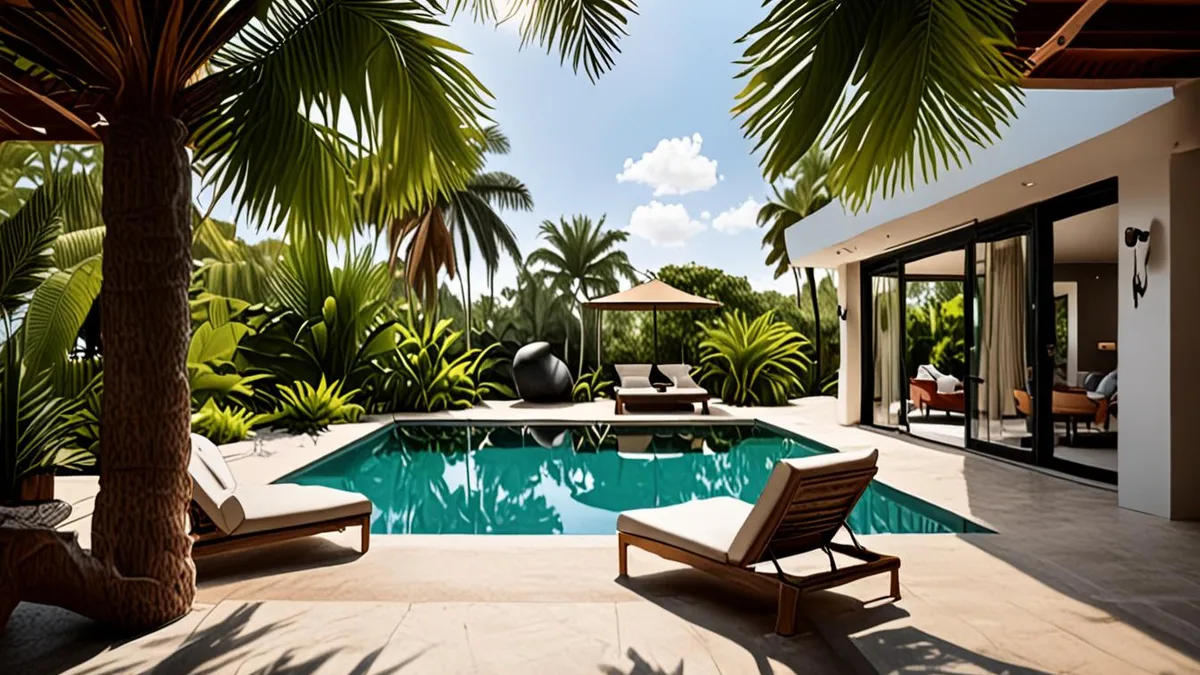
In Southeast Asia and many island destinations, dense tropical planting replaces walls as the main privacy screen. Frangipani, palms, bamboo, and heliconia grow quickly and thickly, so villas are surrounded by greenery that blocks sightlines far more softly than concrete. Done well, this natural screening feels like staying in a private garden — but it depends on the planting being mature, which is worth checking.
Check sightlines in the photos
Open-air pavilion designs are popular in these regions for good reason: they maximize breeze and blur the line between indoors and out. The trade-off is that sightlines between rooms and the outside need checking in photos. A bedroom that opens directly onto a terrace can feel wonderfully free — or uncomfortably exposed, depending on what lies beyond it. Look at listing photos from the bedroom’s viewpoint, not just toward it, and message the host if anything is unclear.
Elevation as a privacy tool
Elevated jungle or hillside villas gain privacy from position rather than fencing. When a villa sits above the tree line or on a steep slope, there’s simply nowhere for neighbors or passersby to look from. This is one of the most reliable forms of seclusion available in tropical destinations, and it usually comes with the bonus of a view.
The key difference from the Mediterranean: here, privacy comes from nature and position, not construction. Confirm both before booking, because a young garden or a mid-slope plot can change the experience entirely.
Security Features to Confirm Before You Book
Security standards vary more between villas than most travelers expect, and the differences are not always visible in listing photos. A standalone home in a hillside village might rely on a simple latch and a neighbor who keeps an eye out, while a villa on the edge of a resort can have staff, cameras at the entrance, and a monitored gate. Neither setup is automatically better, but they suit different travelers. Before you book, ask the owner or manager directly what is in place rather than assuming one region works like another. A short email listing your questions takes minutes and can save you an uncomfortable surprise on arrival.
A good rule of thumb: the more remote and private the villa, the more you should confirm the basics yourself. Privacy and security often go together, but not always — an open, unfenced property with beautiful sightlines can also mean easy access for anyone wandering close. Use the checklist below when comparing options, and keep the answers in writing so you have something to refer back to if anything differs when you arrive.
- Gated access: Ask whether the entrance is an electric gate you control, a manual gate, or an open driveway. Electric gates are common on walled Mediterranean properties and add both security and privacy on arrival.
- In-villa safe: Confirm there is a fixed safe large enough for passports, cash, and a laptop. A drawer lock is not the same thing, and a portable safe you cannot bolt down is a poor substitute.
- Exterior lighting: Well-lit paths, steps, and entrances matter most at villas with long driveways or terraced gardens, where you will be walking after dark.
- Monitored entry: Villas inside gated communities or next to resorts often include staffed or monitored entrances — a layer standalone homes typically lack. In the US and Caribbean, monitored alarms or gated community access are common features of villa rentals.
- Pool fencing: If children are traveling with you, ask specifically whether the pool area is fenced and self-closing. Family-focused villas usually advertise this, but never assume it without asking.
How Privacy Levels Match Your Travel Style
Matching privacy to your group
Couples chasing real seclusion should look first at walled courtyards or elevated hillside positions, not at open-plan layouts. A villa where the bedroom opens straight onto an uncovered terrace can feel exposed even in a quiet area, while a walled Andalusian courtyard or a jungle villa set well above its neighbors gives you genuine solitude without any effort on your part.
Family groups have different priorities. Enclosed grounds let children roam between pool and terrace without you worrying about the road or neighboring properties, and fenced pools and gated driveways are usually standard features on family-focused villas. If that matters to you, make it a booking requirement rather than a hope.
Villa or resort: what you trade
Villa stays suit privacy-focused travelers who want their own space, their own pool, and no shared facilities. Resort guests trade that seclusion for services — restaurants, housekeeping, kids’ clubs — and accept that other guests are nearby. If you are torn between the two, it helps to read a fuller comparison of a villa vs resort stay before deciding. The honest answer is that neither is better; they simply fit different trips, and the right choice depends on how much privacy you are willing to trade for convenience.
Budgeting for Privacy: When Price Reflects Seclusion
What privacy actually costs
In the Algarve, high-season villas with full privacy — walled grounds, no overlooked terraces, a pool only you can see — run roughly €1,200-€4,000 per week depending on size and finish. That is a wide range, and the difference within it usually comes down to position and how completely the property is screened from neighbors.
Position is where the premium lives. A hillside villa with a long, gated approach or a true beachfront plot commands noticeably more than a similar house on the edge of town, where boundaries sit close and terraces can be overlooked. Town-edge villas are not a bad choice — they cost less and put you within walking distance of restaurants — but if seclusion is the point of the trip, budget for the better-sited property.
Timing your booking
For June to September travel, booking 4-6 months ahead secures the widest choice of genuinely private villas. The most secluded properties are also the smallest inventory: there are only so many hillside and beachfront plots in any region, and they tend to be booked first by returning guests. Leave it late and you will still find villas, but the ones left over are more often town-edge homes with shared boundaries. If your dates are flexible, the shoulder months of May and October make high-privacy properties easier to find at gentler prices — check current rates with owners or booking platforms, as they shift year to year.
Choosing the Right Regional Fit for Your Stay
The core lesson is simple: privacy and security are not standard villa features, they are regional ones. Mediterranean villas deliver seclusion through walls, gates and enclosed courtyards, while tropical villas rely on dense planting and elevation. Security ranges from a basic gate to monitored community access depending on where you book, so the same listing description can mean very different things in the Algarve and in Southeast Asia.
Match the region’s privacy style to your group before you commit, and confirm the specific features — gates, alarms, pool fencing — directly with the owner or manager rather than assuming them. If this helped you plan your next villa stay, leave a comment or share the article with a fellow traveler.