Scroll through any resort’s booking page and you’ll find a dozen room types with names like “deluxe lagoon view” or “premium oceanfront swim-up suite.” A resort room category is supposed to tell you what you’re getting, but the labels often say more about marketing than about space, layout or what’s actually included. Many travelers pay extra for upgrades they barely use, or book a “suite” that turns out to be a standard room with a small sofa.
This guide breaks down what common category names really mean, how to match room size to your travel party, and when a view or pool-access upgrade justifies the higher rate. We’ll also look at specialty options like overwater villas, how all-inclusive tiers change what your room includes, and how timing your booking affects the categories still available. By the end, you’ll know exactly which questions to ask before you click “book.”
What Resort Room Categories Actually Mean
Resort room labels sound standardized, but they’re really shorthand the property invented. Still, most follow a rough logic. A standard room is the base option: one sleeping area, a bathroom and minimal extra space. A deluxe room is usually the same layout, just bigger, better located or recently refurbished. A junior suite adds a separate sitting area within one open space, while a true suite has a wall or door between the bedroom and living area. A villa implies a standalone unit, often with its own plunge pool or garden.
Typical sizes to expect
Standard rooms typically measure 25-35 sqm, suites usually run 45-80 sqm, and family rooms fall between 40-60 sqm. These ranges give you a quick sanity check when a category name sounds impressive but the floor plan looks thin.
Here’s the catch: the same category name can describe very different rooms at different resorts. One property’s “deluxe” may be another’s standard, and a “suite” at a city hotel might be smaller than a family room at a beach resort. Always check the listed square meters and the floor plan images rather than trusting the label. If the resort doesn’t publish sizes, email and ask, and compare the answer against the typical ranges above before deciding whether the upgrade is real or just a rename.
Matching Room Size to Your Travel Party
The right room category starts with who’s traveling. For couples, a standard or deluxe room is usually enough, since you’ll spend most waking hours at the pool, the beach or the restaurant. A junior suite earns its premium mainly by adding a sitting area, which matters if you like space to spread out, enjoy a quiet morning coffee away from the bed, or plan a longer stay where a cramped room starts to feel tight. Couples who work a little on vacation or like to lounge with a book in the afternoon often find that extra seating pays for itself in comfort.
Families need to dig deeper. Check the maximum occupancy per room before assuming one room works, because a “family room” that sleeps two adults and one child won’t fit a family of five. Interconnecting rooms suit groups of 4-6, giving parents a separate space while keeping kids close by an internal door. If your group is larger, some resorts can add a rollaway bed or connect a third room, but expect limited availability and ask early.
- Occupancy limits include children. Some resorts count an infant in the maximum occupancy, others don’t, so confirm how your youngest children are counted before booking a room at its limit.
- Interconnecting rooms often can’t be guaranteed online. Many resorts treat them as a request rather than a bookable category, so call the resort and get the connection confirmed in writing.
- Kids’ clubs change the math. Most clubs accept children roughly ages 4-12, so if your kids fall in that range and will spend hours there, you can often downsize the room and put the savings toward a better location or view.
- Teens change it again. With no kids’ club to occupy them, older children spend more time in the room, which makes a sitting area or second sleeping space genuinely useful rather than a luxury.
One more practical step: ask how many people the resort actually allows per room category, not just how many beds it has. Two double beds may technically sleep four, but if the listed occupancy caps at three, you’ll be forced to book a second room or a larger category at check-in. Getting this confirmed in writing before you pay saves an awkward and expensive conversation at the front desk.
When a View Upgrade Is Worth the Price
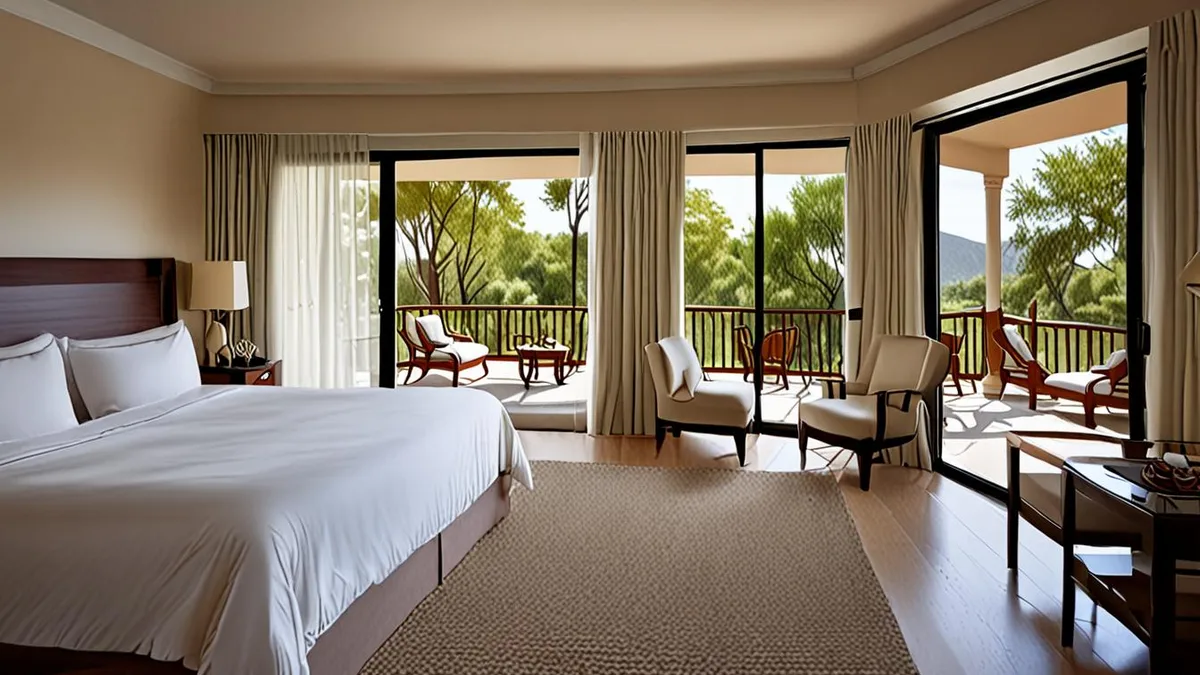
View upgrades usually add 15-40% to the base nightly rate, which over a weeklong stay can equal the cost of an extra night. Whether that money is well spent depends on how the resort defines the view. An oceanfront room generally sits directly facing the water with nothing in between, an ocean view means you can see the sea from the room, often at an angle or over rooftops, and a partial view might be a sliver of blue between palm trees or buildings. The gap between those labels is exactly where disappointed guests are made.
Questions to ask before paying for a view
Ask whether the view faces sunset or sunrise, since that determines when you’ll actually enjoy it from your balcony. A west-facing oceanfront room gives you evening color over the water with dinner drinks in hand; an east-facing one rewards early risers. Also ask whether other buildings block the line of sight, especially at resorts built in terraces or clusters, where a lower-floor “ocean view” can look straight into the neighboring block.
Then be honest about your itinerary. If you’re booking a two-night stopover or a trip built around daily excursions, you’ll barely glance at the window, and the premium is wasted. Save the view upgrade for slow stays, honeymoons and long mornings on the balcony, where you’ll get real value from every percentage point you paid.
Specialty Categories: Pools, Swim-Ups and Overwater Villas
Swim-Up and Pool-Access Rooms
Swim-up rooms give you direct access to a shared or semi-private pool, usually from a terrace or patio with a ladder or steps straight into the water. Pool-access rooms work similarly but may sit a few steps from the water rather than right on it. These categories typically carry a 20-50% premium over a standard room at the same resort, so it pays to ask exactly what “direct access” means before you pay it.
If you love starting the day with a swim or cooling off without hauling towels to a main pool, the premium can feel worth every cent. If you are the type who spends most of the day on excursions or at the beach, you may barely use it.
Overwater Villas
Overwater villas are the dream category at many island and lagoon resorts, and they come with a dream-level price tag. They commonly cost 2-3 times the price of a garden room at the same resort. What you get for that is privacy, uninterrupted water views, and often direct lagoon access from your own deck or ladder.
Before booking, be honest about your plans. If you will spend hours snorkeling off your deck or reading on a private sun terrace, the splurge delivers real value. If you mostly want a comfortable base between activities, a garden or beachfront room leaves money for spa treatments, diving trips, or a longer stay. Also ask about sun exposure on the deck, since some overwater sections sit in shade for part of the day.
All-Inclusive Tiers and What the Room Category Includes
At many all-inclusive resorts, the room category you pick does more than determine square meters. Higher categories often come bundled with extras: dining credits, access to à la carte restaurants, premium drinks, or a reserved table at specialty venues. Entry-level rooms may be limited to buffet dining or require reservations that book out days in advance.
When comparing categories, look past the floor plan and ask what the upgrade actually buys beyond space. Some of the most common perks include:
- Club or executive lounge access: a quieter space with all-day snacks, drinks, and sometimes a dedicated concierge who can handle dinner reservations.
- Upgraded minibar: higher categories often include restocked premium drinks and snacks at no extra charge, while standard rooms may offer only water and soft drinks.
- Butler or personal concierge service: typically reserved for suites and villas, this can cover unpacking, reservations, and arranging excursions.
- Priority restaurant access: some resorts let top-category guests book specialty dining earlier or skip reservation limits entirely.
One caution: at many resorts it is the board level, not the room level, that drives your total cost. A standard room on a premium meal plan can cost more than a suite on the basic plan. If dining matters most to you, compare what each board option includes before paying for a room upgrade. Our guide to all-inclusive versus half-board resorts can help you decide which meal plan fits your trip.
Timing Your Booking to Get the Category You Want
Room categories are not all created equal when it comes to availability. Booking 3-6 months ahead gives you the widest choice of categories, especially at smaller resorts where there may be only a handful of suites, overwater villas, or true oceanfront rooms. Wait too long and you may find that every oceanfront room is gone, leaving you to choose between a partial view and a much higher price.
Why Entry-Level Rooms Disappear First
In high season, the cheapest categories sell out first, which means last-minute bookers are often pushed into pricier categories whether they want them or not. If your dates are fixed and fall in peak weeks, build some budget flexibility into your plan, or book early enough to lock in the category you actually want. If your dates are flexible, it can help to understand the best time to book resort stays for lower prices before you commit.
Compare the True Total, Not the Base Rate
When you line up two or three categories side by side, compare the full cost of each stay, not just the headline nightly rate. Many resorts charge mandatory resort fees, service charges, or local taxes that apply to every room, and some categories also carry higher fees or minimum-night requirements. A room that looks like a small step up can grow once those extras are added in. Check what is included in each rate before you decide, and confirm the final total at checkout so there are no surprises on arrival.
Choosing Your Room Category With Confidence
Resort listings can pack dozens of categories into one booking page, and it is easy to pay for an upgrade you never actually use. The fix is simple: match the category to your travel party first, then decide whether a view or a private pool genuinely justifies the premium. If you want real choice rather than whatever is left, book 3-6 months ahead.
Most of all, ignore the label and check the details. Square meters, maximum occupancy and the inclusions list tell you far more than words like “deluxe” or “junior suite” ever will, since those names vary from one resort to the next. Compare what each category actually includes against the price, and the right choice usually becomes obvious. If this helped you sort out your next booking, leave a comment or share the article with a fellow traveler.